

As a supplier of IECEx Certified Increased Safety Motors, I often encounter inquiries regarding the technical specifications of our products. One of the most frequently asked questions is about the maximum allowable frequency variation for these motors. In this blog post, I will delve into this topic, providing a comprehensive understanding of the factors involved and the implications for motor performance.
Understanding IECEx Certified Increased Safety Motors
Before discussing the frequency variation, it's essential to understand what IECEx Certified Increased Safety Motors are. These motors are designed to operate in potentially explosive atmospheres, adhering to the strict safety standards set by the International Electrotechnical Commission (IEC). The "increased safety" concept aims to minimize the risk of ignition by ensuring that the motor is constructed and installed in a way that reduces the likelihood of electrical faults and sparks.
Our IECEx Certified Increased Safety Motor is a prime example of such a product. It undergoes rigorous testing and certification processes to meet the IECEx standards, providing reliable and safe operation in hazardous environments.
The Role of Frequency in Motor Operation
Frequency is a critical parameter in the operation of electric motors. It refers to the number of cycles per second of the alternating current (AC) power supply. In most countries, the standard frequency for AC power is either 50 Hz or 60 Hz. The frequency of the power supply directly affects the speed of the motor, as the synchronous speed of an AC motor is determined by the frequency and the number of poles in the motor.
The relationship between the synchronous speed (Ns), frequency (f), and the number of poles (p) is given by the formula:
Ns = 120 * f / p
For example, a 4-pole motor operating at a frequency of 50 Hz will have a synchronous speed of 1500 revolutions per minute (RPM), while the same motor operating at 60 Hz will have a synchronous speed of 1800 RPM.
Maximum Allowable Frequency Variation
The maximum allowable frequency variation for an IECEx Certified Increased Safety Motor is typically specified by the manufacturer and is based on the motor's design and the requirements of the IEC standards. In general, the allowable frequency variation is within ±5% of the rated frequency.
For a motor rated at 50 Hz, the allowable frequency range would be between 47.5 Hz and 52.5 Hz. Similarly, for a 60 Hz motor, the allowable range would be between 57 Hz and 63 Hz. Operating the motor outside this frequency range can have several negative effects on its performance and safety.
Effects of Frequency Variation on Motor Performance
Speed Variation
As mentioned earlier, the speed of an AC motor is directly proportional to the frequency of the power supply. Therefore, any variation in frequency will result in a corresponding change in the motor's speed. If the frequency increases, the motor will run faster, while a decrease in frequency will cause the motor to slow down.
This speed variation can have a significant impact on the performance of the equipment driven by the motor. For example, in a conveyor system, a change in motor speed can affect the flow rate of the material being transported, leading to inefficiencies or even production disruptions.
Torque and Power Output
The torque and power output of an AC motor are also affected by the frequency. At frequencies below the rated frequency, the motor's torque capability decreases, which can lead to overloading and overheating if the motor is required to drive a constant load. On the other hand, at frequencies above the rated frequency, the motor's power output may increase, but this can also cause excessive stress on the motor's components, reducing its lifespan.
Efficiency
Frequency variation can also affect the efficiency of the motor. Operating the motor outside the allowable frequency range can increase the motor's losses, such as iron losses and copper losses, resulting in lower efficiency and higher energy consumption.
Insulation and Cooling
The insulation and cooling systems of the motor are designed to operate within a specific frequency range. A significant deviation from the rated frequency can affect the performance of these systems, leading to overheating and potential damage to the motor's insulation. This can increase the risk of electrical faults and reduce the motor's reliability and safety.
Importance of Adhering to the Allowable Frequency Range
Adhering to the maximum allowable frequency variation is crucial for ensuring the safe and reliable operation of IECEx Certified Increased Safety Motors. By operating the motor within the specified frequency range, you can:
- Maintain the motor's speed and torque characteristics, ensuring consistent performance of the driven equipment.
- Minimize the risk of overloading and overheating, which can extend the motor's lifespan and reduce the likelihood of breakdowns.
- Improve the motor's efficiency, reducing energy consumption and operating costs.
- Comply with the IEC standards and ensure the safety of the motor and the surrounding environment.
Our Product Range
In addition to our IECEx Certified Increased Safety Motor, we also offer a range of other explosion-proof motors, including the YB3 Explosion-proof AC Asynchronous Three-phase Motor. These motors are designed to meet the diverse needs of our customers in various industries, providing reliable and safe operation in hazardous environments.
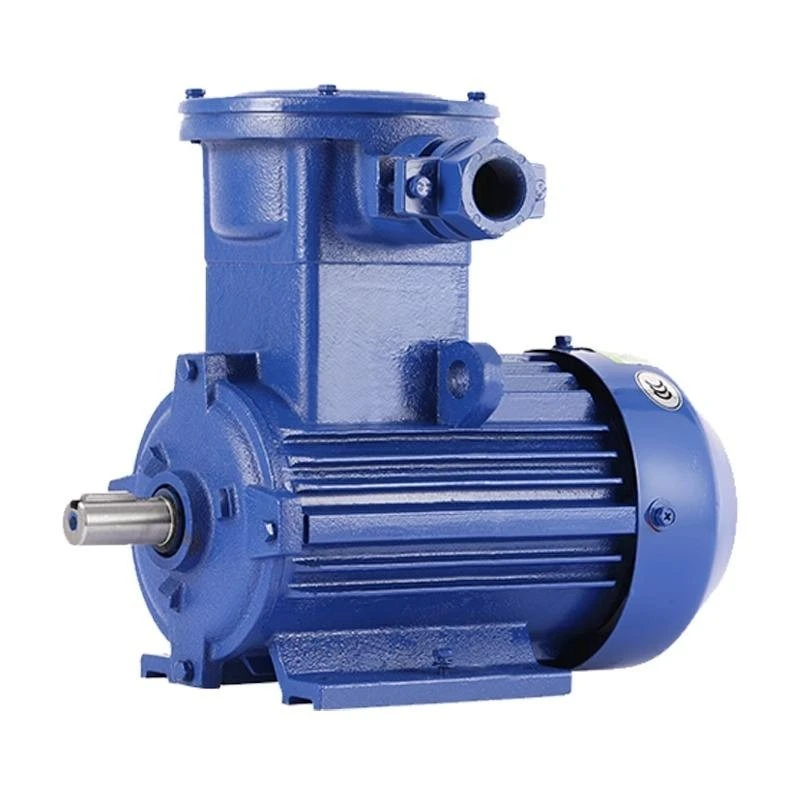

Our Professional Explosion Proof Motor is another popular product in our portfolio. It is built with high-quality materials and advanced manufacturing techniques to ensure superior performance and durability.
Contact Us for Procurement
If you are interested in purchasing our IECEx Certified Increased Safety Motors or any other explosion-proof motors, we encourage you to contact us for procurement discussions. Our team of experts is ready to assist you in selecting the right motor for your specific application and providing you with detailed technical information and support.
References
- International Electrotechnical Commission (IEC). IEC standards for electrical equipment in explosive atmospheres.
- Manufacturer's documentation for IECEx Certified Increased Safety Motors.